Why Stainless Steel Bezels Still Matter in Modern Dive Watches
- Marc Dubois

- Mar 3
- 5 min read
In recent years, ceramic bezels have received significant attention in the watch industry. Many buyers now associate ceramic with luxury and modern refinement.
But in the world of true tool watches, stainless steel dive watch bezels remain a serious, intentional engineering choice.
If you're researching the best Swiss dive watch under $1,000, understanding bezel construction is essential. The bezel is not decorative — it is a functional timing instrument. It affects durability, longevity, usability, and long-term ownership satisfaction.
This guide explains:
What a dive watch bezel does
How a unidirectional bezel works
Steel vs ceramic comparison
Impact resistance and durability
Serviceability over time
Why stainless steel remains relevant
Which bezel material is best for real-world use

What Is a Dive Watch Bezel?
A dive watch bezel is a rotating outer ring surrounding the crystal. On a true Swiss automatic dive watch, it is used to track elapsed time underwater.
Divers rotate the bezel so the zero marker aligns with the minute hand. As time passes, they can quickly see how many minutes have elapsed.
This simple mechanical system allows divers to monitor air supply and dive duration safely.
In a true tool watch, functionality always comes first.
What Is a Unidirectional Bezel?
A unidirectional bezel rotates in only one direction — typically counterclockwise.
This design is intentional.
If the bezel is accidentally moved during a dive, it will only shorten the perceived dive time — not extend it. That means the diver will surface earlier than necessary rather than risk staying underwater too long.
This safety feature is standard in professional dive watches and is a defining element of a legitimate 200m dive watch.
For a complete guide to dive watch standards, read:→ What Does 200m Water Resistance Really Mean?(/blog/what-does-200m-water-resistant-mean)
The Role of the Bezel in a Tool Watch
In a dive watch, the bezel must provide:
Precise rotation
Confident click action
Clear minute markings
Durability under impact
Resistance to saltwater exposure
Support around the sapphire crystal
A weak bezel undermines the entire purpose of a dive watch.
For buyers searching for the best dive watch under $1,000, bezel construction deserves as much attention as movement type or crystal material.
Stainless Steel Bezel Dive Watch vs. Ceramic
Modern buyers often compare steel and ceramic.
Here’s how they differ.
Stainless Steel Bezels
Highly impact resistant
Structurally durable
Traditionally used in professional dive watches
Can be refinished if scratched
Match brushed case aesthetics
Ceramic Bezels
Extremely scratch resistant
High-gloss finish
Fade resistant
More brittle under sharp impact
Often more expensive
Both materials have strengths.
But steel emphasizes structural durability and serviceability — key traits in a true tool watch.
Impact Resistance — Where Steel Excels
Hard materials resist scratches. Tough materials resist impact.
Ceramic is very hard. Stainless steel is tough. Combines well with a pressure-tested 200m case
In real-world use — especially in outdoor environments — impacts happen.
Steel bezels absorb impact more predictably. If they mark, they often develop light surface scratches rather than cracking.
For many buyers seeking a rugged Swiss dive watch under $1,000, this resilience is important.
Serviceability and Long-Term Ownership
Over a decade of ownership, wear is inevitable.
Stainless steel offers a practical advantage: it can be refinished.
Minor scratches can often be brushed out or polished during servicing.
Ceramic, while scratch resistant, cannot be refinished if damaged. Replacement is typically the only solution.
For buyers thinking long term, serviceability matters.
If you're evaluating ownership beyond just aesthetics, read:→ Sapphire Crystal vs Mineral Crystal(/blog/sapphire-vs-mineral-crystal)
Both crystal and bezel material affect long-term durability.
Aesthetic Considerations — Understated vs Gloss
Ceramic bezels often deliver a high-gloss, modern appearance.
Stainless steel bezels tend to present a more subdued, utilitarian look.
In many traditional dive watches, steel complements brushed case finishing and reinforces the tool watch aesthetic.
For enthusiasts who prefer heritage-inspired design and practical durability, steel remains appealing.
Weight and Structural Integrity
Steel bezels integrate seamlessly into stainless steel case construction.
This creates:
Balanced weight distribution
Consistent material feel
Unified finishing
In a mechanical Swiss automatic diver, cohesion between materials contributes to overall structural integrity.
Why Steel Remains Relevant in the Sub-$1,000 Category
In the Swiss dive watch under $1,000 segment, value density matters.
Steel bezels provide:
Durability
Serviceability
Traditional engineering
Lower long-term replacement cost
Functional reliability
Rather than chasing trends, steel reflects purposeful design.
The Heritage of Stainless Steel in Dive Watches
Many early professional dive watches featured stainless steel bezels.
These watches were built for:
Military divers
Commercial divers
Underwater exploration
They prioritized function over cosmetic perfection.
Today, steel continues that legacy.
If you're searching for a serious, mechanically sound dive watch rather than a fashion-forward piece, stainless steel remains a strong choice.
How Bezel Action Affects Usability
Beyond material, bezel performance matters.
A quality unidirectional bezel should offer:
Firm clicks
Minimal back play
Precise alignment
Strong grip texture
These traits define the experience of owning a true tool watch.
When evaluating a Swiss automatic dive watch under $1,000, always test bezel action if possible.
The Montoir Approach to Bezel Construction
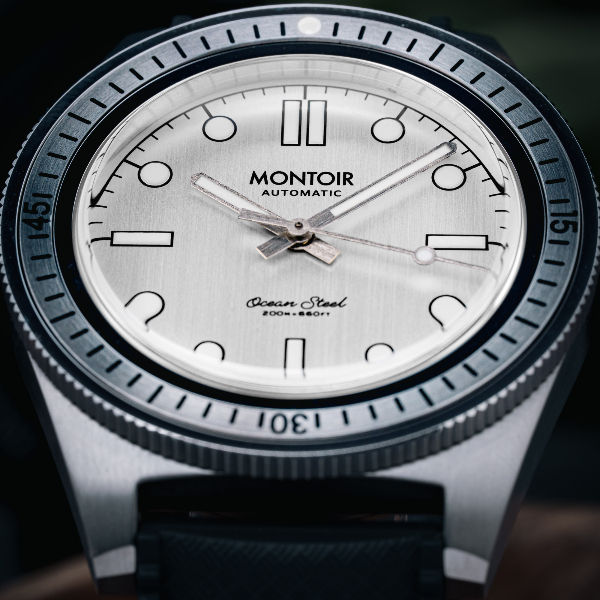
The Montoir V2.5 uses:
Stainless steel unidirectional bezel
Robust click mechanism
Strong grip profile
200m-rated case construction
Sapphire crystal integration
Rather than focusing on high-gloss aesthetics, the emphasis remains on durability and traditional tool-watch engineering.
If you're evaluating stainless steel Swiss dive watches:
Production remains limited.
Frequently Asked Questions
Is stainless steel better than ceramic for a dive watch?
It depends on priorities. Steel offers strong impact resistance and serviceability. Ceramic offers higher scratch resistance but less refinishing flexibility.
Do steel bezels scratch easily?
Steel can develop surface marks over time. However, many scratches are cosmetic and can often be refinished.
Why do some luxury watches use ceramic?
Ceramic provides scratch resistance and a modern aesthetic. It has become popular in luxury sports watches.
Is ceramic stronger than steel?
Ceramic is harder but more brittle. Steel is tougher and more impact resilient.
Which bezel material is best for long-term ownership?
Many buyers prefer stainless steel for durability and refinishing potential.
Final Thoughts — Function Over Trend
The bezel is not decoration.
It is a functional timing instrument central to the identity of a dive watch.
While ceramic has gained popularity, stainless steel dive watch bezels remain a serious, durable, and serviceable choice — especially in the sub-$1,000 category.
For buyers prioritizing tool-watch engineering, impact resistance, and long-term ownership value, steel remains highly relevant.
If you're evaluating the complete picture — movement, crystal, water resistance, and bezel — Check out:→ top Swiss dive watches under $1,000
And if you're ready to explore Swiss automatic dive watches built around durability:


Comments